

📌 Updates
Last updated: August 27, 2026
- Aug 12, 2026: The 7-day stay expired. The injunction is now in effect. DOJ did not seek an emergency stay.
- Aug 5, 2026: Judge Hendrix issues permanent injunction in Silencer Shop Foundation v. ATF. NFA registration requirements for suppressors, SBRs, and SBSs struck down for covered plaintiffs.
We'll add new entries here as the case develops. Bookmark this page.
What happened
If you've been anywhere near 2A social media the last few weeks, you've seen the headlines. Most of them got it half right. Let's cut through the noise and give you the actual story.
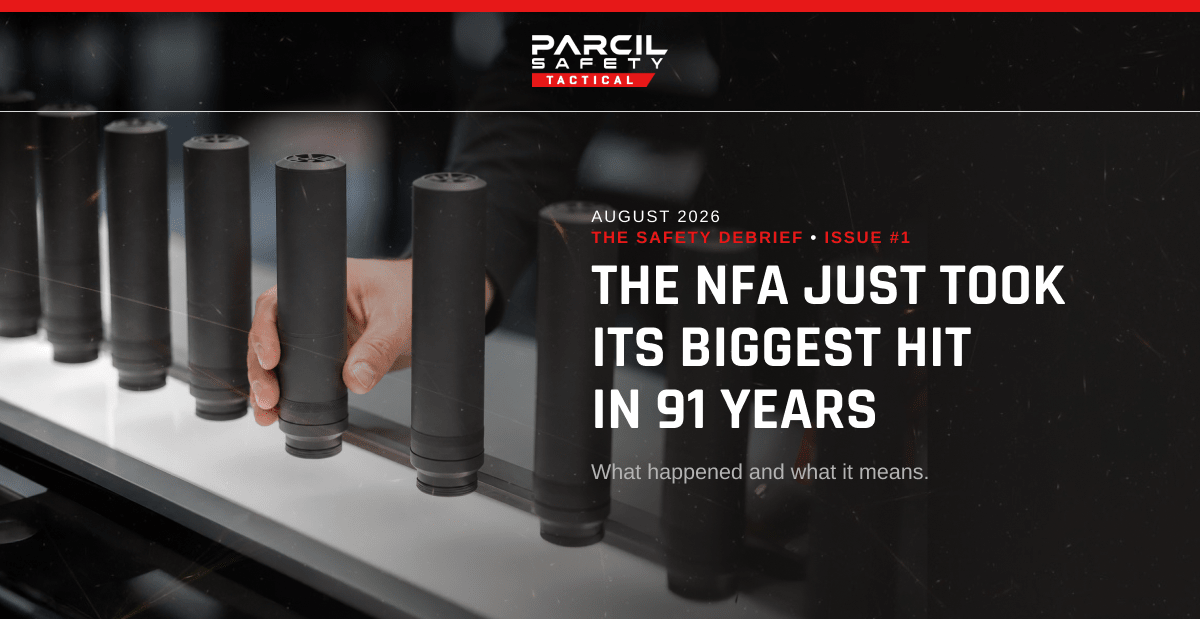
On August 5, 2026, Judge James Wesley Hendrix of the U.S. District Court for the Northern District of Texas issued a permanent injunction in Silencer Shop Foundation v. ATF (consolidated with Jensen v. ATF). The ruling bars the ATF from enforcing NFA registration requirements on suppressors, short-barreled rifles (SBRs), and short-barreled shotguns (SBSs) for covered parties.
The Form 4. The months-long wait. The federal registry entry. The fingerprints. For people covered by this ruling, a court just told the ATF it can't enforce any of it.
The NFA stood on one leg for 91 years. That leg just got kicked out.
Why it happened
Back in 1934, the government couldn't outright ban suppressors and SBRs. So instead, they taxed them $200 and used that tax as the excuse to make you register, submit fingerprints, hand over photos, and wait months for ATF approval. The entire NFA was built on Congress's power to tax.
Then last year, Congress passed the One Big Beautiful Bill and dropped that tax to $0, effective January 2026. The tax stamp was free. But here's the catch: they removed the money part but left all the paperwork in place. Same registration. Same wait. Same fingerprints. Just no dollars attached.
Gun rights groups (Silencer Shop Foundation, GOA, NRA, FPC, SAF, and others) saw the opening and sued. Their argument was dead simple: the entire NFA registration scheme was built on Congress's power to tax. No tax? No legal basis for the registration.
Judge Hendrix agreed. He rejected the government's attempts to justify the registration under the Commerce Clause or the Necessary and Proper Clause, concluding that Congress enacted these provisions solely under its taxing authority. Once that tax hit zero, the constitutional foundation vanished.
What this could mean if you're buying
For people covered by the ruling, buying a suppressor in a legal state now works like buying any other firearm:
- No Form 4 transfer application
- No federal registry entry
- No months-long approval wait
- Pass a standard background check (Form 4473) and walk out same day
That's not hypothetical. The 7-day stay expired on August 12, and the DOJ did not seek an emergency stay. The injunction is currently in effect.
Who's actually covered
This is where most people get it wrong. The ruling doesn't apply to everyone automatically. It covers:
- Named plaintiffs in both lawsuits
- Members of plaintiff organizations: GOA, Firearms Regulatory Accountability Coalition (FRAC), Gun Owners Foundation, FPC Action Foundation, TSRA, Citizens Committee for the Right to Keep and Bear Arms, and SAF
- Customers of commercial plaintiffs: Silencer Shop, Palmetto State Armory, SilencerCo, B&T USA, Hot Shots Custom, and their dealers
-
15 plaintiff states (as governmental entities, NOT their citizens): Alaska, Georgia, Idaho, Indiana, Kansas, Louisiana, Montana, North Dakota, Oklahoma, South Carolina, South Dakota, Texas, Utah, West Virginia, and Wyoming
If you're not a member of one of these organizations and you're not buying from one of these commercial plaintiffs, the ruling may not protect you yet. The easiest path to coverage is joining one of the plaintiff organizations (GOA, FPC, SAF, etc.) or purchasing from a covered dealer.
As the Wiley law firm (who represented plaintiffs in the case) explains, coverage is transactional and party-specific, not a blanket nationwide deregulation.
What hasn't changed
- Machine guns are still fully regulated. This ruling doesn't touch them.
- State bans still apply. Suppressors remain illegal in CA, NY, NJ, IL, MA, DE, HI, RI, and DC.
- The Gun Control Act still applies. Form 4473 and background checks are still required for every transfer.
- SBR and SBS transfers from FFLs still have a wrinkle. 18 U.S.C. § 922(b)(4) independently prohibits licensees from delivering SBRs/SBSs to non-licensees without Attorney General authorization. Until ATF provides a new mechanism, the Form 4 remains the only clear path for those items.
- Some states tie their own suppressor laws to NFA registration. If your state requires NFA compliance for possession, you may still need to go through the process even if the federal injunction covers you.
- Interstate transport of unregistered NFA items is legally unclear. The court did not enjoin 26 U.S.C. § 5861(j) and (k), which relate to interstate commerce of unregistered firearms.
Where this stands right now
Let's be real: this is not a done deal.
The DOJ has until October 5, 2026 to appeal the ruling to the 5th Circuit. They declined to seek an emergency stay, which is a good sign, but that doesn't mean they won't appeal on the normal timeline. ATF has not issued any implementation guidance, and according to the NSSF, it's unlikely they will anytime soon.
If this gets appealed, the legal fight could stretch out for months or years. A higher court could stay the ruling while the appeal is considered, which would put the registration requirements back in effect temporarily.
Don't walk into a shop expecting zero paperwork unless you've confirmed you're covered and your state law allows it. This is still playing out in the courts.
What's next
We're watching for a few things:
- Whether DOJ appeals before October 5. This is the big one.
- ATF guidance (or lack thereof). FFLs are operating in a gray area without official direction from the agency.
- Potential expansion of the ruling. Plaintiffs are pushing to widen coverage beyond just their members and customers.
- State-level responses. Some states may update their own laws in response to the federal ruling. Others may dig in.
We'll update this post as things develop. If you want the straight story without having to piece it together from Reddit threads and YouTube thumbnails with red arrows, you're in the right place.
Sources
- NRA-ILA: Federal Court Strikes Down NFA Registration Requirements (Aug 5, 2026)
- Silencer Central: NFA Ruling Update and What It Means for Suppressor Ownership
- Wiley Law: NFA Court Ruling Reshapes Compliance (Aug 18, 2026)
- NSSF: Guidance on NFA Transfers (Aug 17, 2026)
- Silencer Shop: The NFA Registration Is Gone (Aug 5, 2026)
We're not lawyers and this isn't legal advice. We're paying attention to this case because our customers are paying attention to it, and we'd rather give you the straight version than let you sort through the noise on your own. Always consult with a licensed attorney and check your state and local laws before making any purchasing decisions.
Leave a comment
All comments are moderated before being published.
This site is protected by hCaptcha and the hCaptcha Privacy Policy and Terms of Service apply.